Save Energy and Money Checklist
Save Energy and Money while helping the Environment

How energy efficient is your home?
Find out how well you are achieving electrical efficiency and therefore cost minimization.
There is potential to save money, $100s or $1000s every year.
Examine which sections apply to you and see what new energy savings are possible.
Use Online calculators to find out how much energy and money can be saved.
Energy Efficient Home Sections
Other Local links: Matthewb Homepage , Energy Efficiency Section ,
Lighting
One of the easiest methods to reduce energy consumption is to turn off lights when leaving a room and trying to use sunlight instead of artificial light.
The next step is to consider which lights are used most often and are there more energy efficient lights possible.
LED lights use 80% less energy than incandescent lights.LED lights costs approximately $12 each. Many sizes and and
energy wattage types are available. Choose one that best suits the
working environment.
LED lights use 60% less energy compared to halogen lights. LED lights cost $20-$30 each but last 25+ times longer.
I have created a Light Energy Calculator
to work out the upfront and running costs of a lighting change.
If you are renting consider using efficient lights during your lease and returning the old lighting at the end of the lease.
For further background information on lighting including charts showing possible savings see
Hot Water
Hot water can be one of the largest energy consumers.
Hot water consumption can be reduced by more than 50% using water saving shower heads and tap aerators.
Save 55% on hot water consumption by using a water saving shower head.These cost less than $40 each.
Save 65% on hot water consumption by using a tap aerator.These cost less than $10 each.
I have created a
Hot Water Calculator
to work out your yearly hot water consumption and costs.
Use the calculator to see how simple changes can make big differences in energy consumption and costs.
An added feature of the calculator is to see how much money could be saved if solar hot water was used.
Cooling
Cooling choices can reduce you energy consumption.
The simplest cooling methods include natural breezes and shading.Fans can be used to assist air circulation.
Roof ventilation can help with keeping the air above the ceiling cooler when used with eave vents.
More control of this roof temperature can be made with a thermostatically controlled powered roof ventilator.
Insulation can reduce your heat gain or heat loss from your house by 60%
White roof thermal barrier paint can reduce heat entering the building
Exhaust fans can have draft stoppers placed on top of them to only open when the exhaust fan is active.
Evaporative air conditioning is cheaper to run compared to refrigerated air conditioning in dry climate areas.
Set air conditioning cooling to 24 degrees celcius. and for heating 20 degrees celcius.
Close doors, windows, curtains to contain cool air conditioned airflow. Try to reduce other places where cool air is lost.
Reducing your energy consumption also can reduce your cooling needs relating to the operating devices.
Heating
Heating and cooling have some similar goals.
Insulation in the ceiling and walls with reducing drafts can save 60% in heating losses.
Reverse cycle air conditioning is a very efficient form of heating.
Setting the heat thermostat for 20 degrees celcius can reduce costs.
Gas and reverse cycle heating are more efficient than standard electric heaters.
Dressing appropriately for the climate can save some costs.
Entertainment
These devices can contribute to a high proportion of standby costs for a building.
The simplest energy control is to turn off the power at the power point.
Where this is difficult, remote controlled power boards are available for approximately $40.
LED LCD displays use less energy compared to LCD displays of an equal size.
Assume each TV can contribute $30 to $200 per year to your power bill. Standby consumption varies greatly between models.
Having a device on standby is a better option than fully on when not in use.
Computers
|
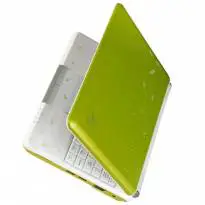
Computers have huge options for energy minimization. |
|
Appliances
Consider the quantity of appliances and the potential for energy efficiency.
How many need to be always on? How many devices use standby power? What can be turned off?
Can a washing machine be set to only use cold water?
Can the second fridge be turned off and save approximately $100 per year in energy?
Can clothes be dried on a clothes line and save approximately $100 per year in energy?
Choose appliances that have switched mode power supplies that run more efficiently.
Choose appliances that meet the 1 watt standby standard.
Timers
Timer can be bought for less than $10 and can power on many different devices.
Run a timer on a pool pump and save approximately $1000 per year in energy.
Run a timer on an air conditioner and save $100s or $1000s.
Use timers to control lighting in either fixed times of the day.
Countdown timers can be used for classrooms, stairways, walkways, exhaust fans etc.
Consider timers for photocopiers and printers.
Any device with a moderate standby power consumption may benefit from a timer to save energy.
Measurement
To find out where your energy is being used to a finer degree requires measurement.
The simplest and cheapest measurement is to read and log the utility power meter daily.
Work out daily energy trends for weekdays and weekends, summer versus winter etc.
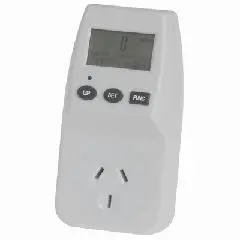
To measure appliance individually requires a power meter. These cost about $30. See a review on a
Power Point Meter.
Find out the power consumption of devices in various modes and during standby.Use the
Appliance Calculator to work out annual running costs of each device.
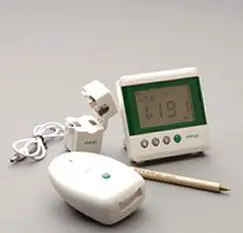
Building power meter are available to show real time power consumption and daily, weekly, monthly totals.See a
These cost $100 for single phase and $150 for 3 phase plus installation by an electrician.
Once you have the consumption information you can then begin a efficiency plan with confidence.
Work out how much you can save with various changes and see the results instantly.
|
|
More Information
To take your energy efficiency practices to the next level consider an Energy Efficiency eBook.
- 60 Technologies reviewed
- 54 Best practices that can be applied for free
- 147 Reference links for further information
- Examples of efficiency savings from a few cents to $100,000s per year
- Commonly asked questions answered
- Solutions including what to do
- 31 tables included to help you calculate your energy savings
- 6 online calculators to work out your savings more precisely
- Full table of contents with section links and cross referencing to related topics
- Save Electricity
- Save Money
- Save Water
- Reduce Carbon Footprint
- Generate Electricity
- Even make money
For more Energy Efficiency information see link Energy Efficiency eBook
Other Local links: Matthewb Homepage , Energy Efficiency Section , Home Electricity and Money Saving Checklist Calculator , Business Electricity and Money Saving Checklist Calculator
Where is your energy consumption going? What ideas does the checklist suggest?


